

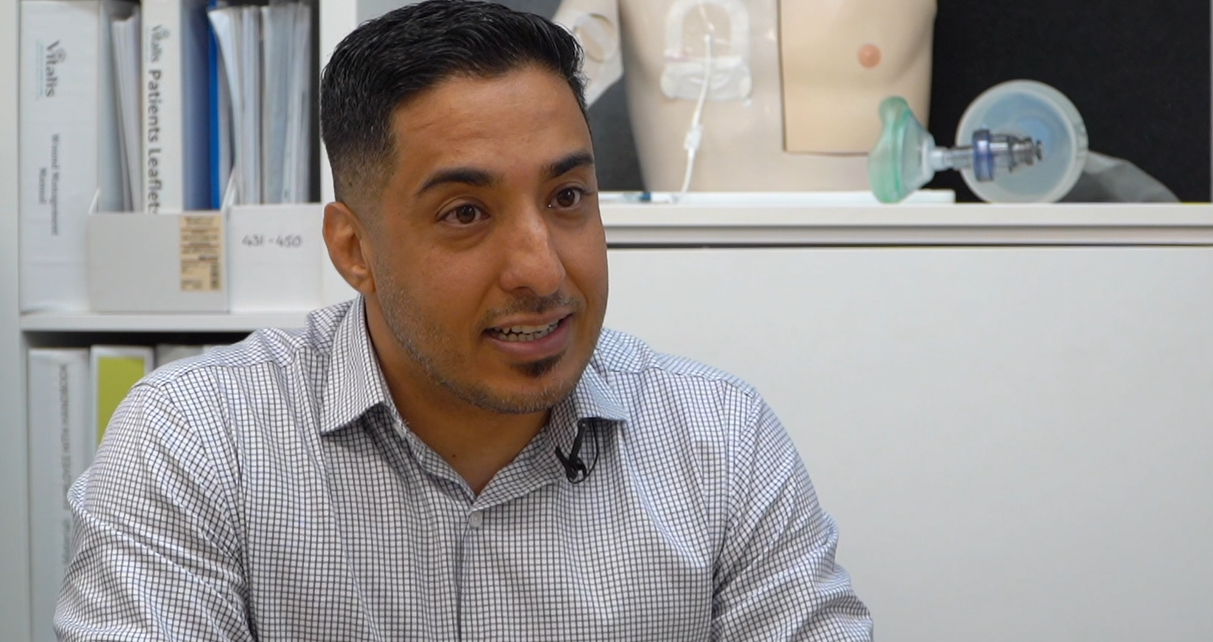
Vitalis Health Head of Virtual, Iman Malek, explores the quiet shift that is reshaping hospital delivery – driven by virtual hospital capability.
Healthcare systems have traditionally been built around episodes of illness – intervening once a patient becomes acutely unwell. While this approach has supported decades of clinical excellence, it is increasingly challenged by rising demand, ageing populations, and the growing prevalence of chronic disease.
A quiet but significant transformation is now underway: the shift from reactive healthcare to proactive, continuous care.
Virtual hospital capability enables clinicians to extend oversight beyond the physical hospital environment, supporting earlier intervention, improved outcomes, and more sustainable health system performance. For Australian hospitals and private health insurers, proactive virtual care is rapidly emerging as a strategic lever to improve quality while managing cost and capacity pressures.
Explore the Vitalis approach to proactive virtual care: https://vitalis.health/virtual-and-remote-services/virtual-hospital-care/
The structural limitations of episodic care
Traditional models of care are structured around discrete clinical encounters – admission, treatment, discharge – after which responsibility often shifts back to patients and primary care providers.
This episodic structure creates recognised risk points:
- Clinical deterioration between scheduled touchpoints
- Avoidable hospital readmissions
- Fragmented communication between providers
- Unmet support needs following discharge
- Delayed escalation of emerging complications.
Transitional care periods are particularly vulnerable. Evidence shows that technology-enabled hospital-at-home and virtual ward models can achieve clinical outcomes comparable to inpatient care while reducing hospital utilisation in appropriate patient cohorts [https://www.ncbi.nlm.nih.gov/books/NBK604826/; https://www.saxinstitute.org.au/evidence-check/the-effectiveness-of-virtual-hospital-models-of-care/].
A rapid evidence review commissioned for the Australian health system found virtual hospital models demonstrated similar or improved outcomes including reductions in hospitalisations, readmissions, emergency department presentations and length of stay when compared with usual care [https://www.saxinstitute.org.au/evidence-check/the-effectiveness-of-virtual-hospital-models-of-care/].
Systematic reviews also indicate hospital-at-home programs can achieve equivalent mortality outcomes and may reduce transitions to residential care for some patient groups [https://pmc.ncbi.nlm.nih.gov/articles/PMC9835137/].
These findings reinforce the growing consensus that extending care beyond hospital walls can improve both patient and system outcomes.
From episodic treatment to continuous clinical oversight
Virtual hospital care introduces continuity into traditionally fragmented pathways by enabling structured monitoring during the recovery period.
Through remote patient monitoring, digital engagement tools and structured clinical review pathways, care teams can identify early warning signs of deterioration and intervene before escalation is required.
Continuous oversight supports:
- Earlier detection of clinical deterioration
- Proactive clinical decision-making
- Improved patient confidence and engagement
- Enhanced coordination between specialists, GPs and community providers
- Reduced avoidable ED presentations and readmissions
International evidence suggests inpatient-level care delivered at home may achieve similar or lower readmission risk compared with traditional hospital care, while supporting shorter lengths of stay [https://pubmed.ncbi.nlm.nih.gov/38561754/].
For hospitals and insurers transitioning toward value-based care models, proactive monitoring capability supports better management of risk across the full patient journey.
The Vitalis Virtual Hospital approach to proactive care
The Vitalis Virtual Hospital program has been designed to extend the standard of hospital-level care beyond the point of discharge, supporting patients through the critical transition period back to home.
Key components of the Vitalis model include:
Continuous monitoring and tracking of patient-reported clinical metrics
Patients submit their chronic, specific symptom data and clinical observations through a dedicated patient app, enabling clinicians to detect emerging risks earlier.
Weekly symptom surveys and Registered Nurse consultations
The surveys include a chronic disease–specific questionnaire (completed on onboarding and at the end of each phase), including a distress-screening questionnaire for diabetes, a wellbeing questionnaire for COPD and a Kansas City Cardiomyopathy questionnaire.
The structured RN-led phone consultations help identify clinical concerns, reinforce care plans and support adherence to treatment pathways.
Structured SMS notifications and reminders
Tailored, patient-centered care plans
These incorporate individual patient goals and targets.
Established professional communication channels
These are with the patient’s GP and specialists.
Early escalation pathways
When indicators of deterioration are identified, the Vitalis clinical team coordinates escalation to the appropriate provider, including GPs, specialists or community services.
Multidisciplinary care coordination
Virtual engagement frequently identifies unmet care needs that may not be captured through episodic clinical interactions alone.
This model aligns with growing evidence that technology-enabled multidisciplinary care delivered in the home environment can achieve outcomes comparable to inpatient care while improving patient experience.
Proactive care in practice: case studies from Vitalis
Continuous clinical oversight allows earlier identification of risk and more timely intervention.
1. Early GP escalation following abnormal respiratory metrics
A patient living with COPD reported symptoms and abnormal observations through the Vitalis remote monitoring app.
The Vitalis clinical team escalated these findings to the patient’s GP, resulting in diagnosis of a chest infection and timely initiation of oral antibiotics — potentially preventing an emergency department presentation or hospital readmission.
2. Blood test monitoring triggering specialist review
Routine pathology results identified low haemoglobin levels for a patient under specialist care.
The Vitalis team coordinated escalation to the patient’s cardiologist, resulting in iron infusion therapy and improved clinical stability.
3. Identification of abnormal blood glucose trends
Elevated blood glucose readings were detected through monitoring engagement, prompting referral to an endocrinologist for review and optimisation of management.
4. Detecting previously unaddressed pressure injury risk
During virtual clinical engagement, a patient disclosed a chronic pressure ulcer that had not previously been escalated through traditional care channels.
The Vitalis team coordinated referral to community nursing services, enabling active wound management and ongoing monitoring.
5. Identifying unmet support needs beyond clinical care
Virtual engagement has also revealed gaps in non-clinical support requirements affecting recovery and wellbeing.
Where appropriate, referrals have been made to the Vitalis Aged Care at Home team, supporting continuity of care and improved patient outcomes.
Alignment with value-based care priorities
For hospitals and private health insurers, proactive virtual care models support multiple strategic priorities:
Reduced avoidable readmissions
Earlier detection of deterioration enables timely intervention before escalation to acute care.
Improved patient outcomes
Continuous monitoring supports faster clinical decision-making and improved stability during recovery.
Enhanced patient experience
Patients benefit from reassurance that clinical oversight continues beyond discharge.
Optimised bed utilisation
Virtual extension of care enables earlier discharge and improved patient flow.
Lower total cost of care
Evidence indicates hospital-at-home models may deliver similar outcomes with lower resource utilisation in suitable patient cohorts.
As health systems shift toward risk-sharing and bundled payment models, proactive care capability becomes an important enabler of sustainable healthcare delivery.
Virtual hospital capability as core health system infrastructure
Virtual hospital models are rapidly evolving from pilot programs into embedded components of healthcare delivery systems internationally.
Evidence reviews highlight their potential to reduce hospital demand while maintaining comparable clinical outcomes across a range of conditions including cardiac disease, COPD, diabetes and stroke rehabilitation.
Hospitals and insurers that integrate virtual care pathways today will be better positioned to:
- Improve continuity across the patient journey
- Strengthen collaboration between acute and community providers
- Support population health strategies
- Improve system resilience during periods of demand pressure.
Strategic partnerships with experienced virtual care providers enable faster and lower-risk implementation.
Partnering with Vitalis to enable proactive healthcare
Vitalis Virtual Hospital enables hospitals and private health insurers to extend clinical oversight beyond traditional settings, supporting earlier intervention and coordinated care across the recovery journey.
By combining remote monitoring, clinical governance frameworks and integrated care pathways, Vitalis supports partners to deliver hospital-standard care in the home environment while improving patient experience and optimising resource utilisation.
Learn more about partnership opportunities: https://vitalis.health/virtual-and-remote-services/virtual-hospital-care/